Saw Palmetto, Nettle and Wild Yam in Men's Formulas: What the Evidence Says
Written by the Horsewood Daily editorial team
Last updated · Who reviewed this page · How we write and review
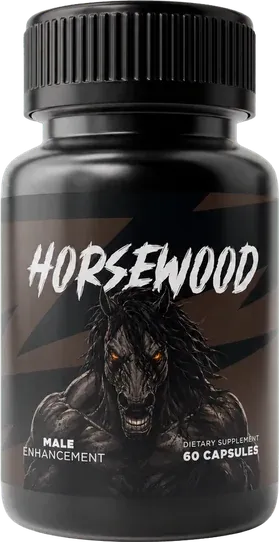
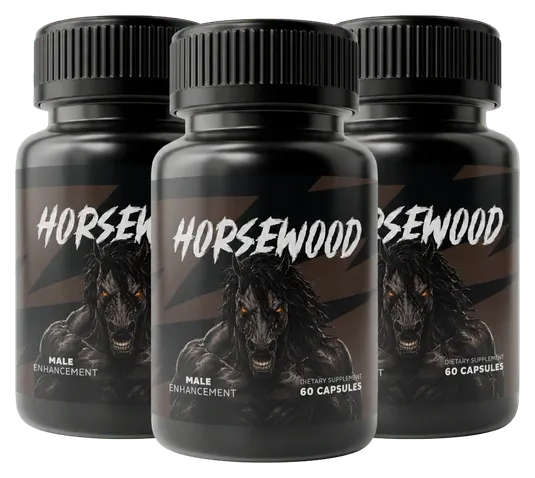
Saw palmetto gave little or no prostate relief even at 320-960 mg a day, and it is not shown to raise testosterone. Prostate trials used nettle root, while Horsewood uses leaf. Wild yam does not turn into DHEA or hormones in the body. Horsewood has 20 mg of each, far below studied amounts.
Why are saw palmetto, nettle and wild yam in Horsewood at all?
They are on the label at 20 mg each, but the label does not explain why. The research on these three herbs is about the prostate and hormone myths, not about desire or performance.
Horsewood sells itself on blood flow, libido and stamina. Saw palmetto and nettle were studied for urinary symptoms of an enlarged prostate. Wild yam is tied to an old idea that it turns into hormones. None of the three has been shown to raise testosterone or sex drive in men.
That does not make them harmful. It does mean you should judge them on what they were actually tested for.
What does the Horsewood label list for these three herbs?
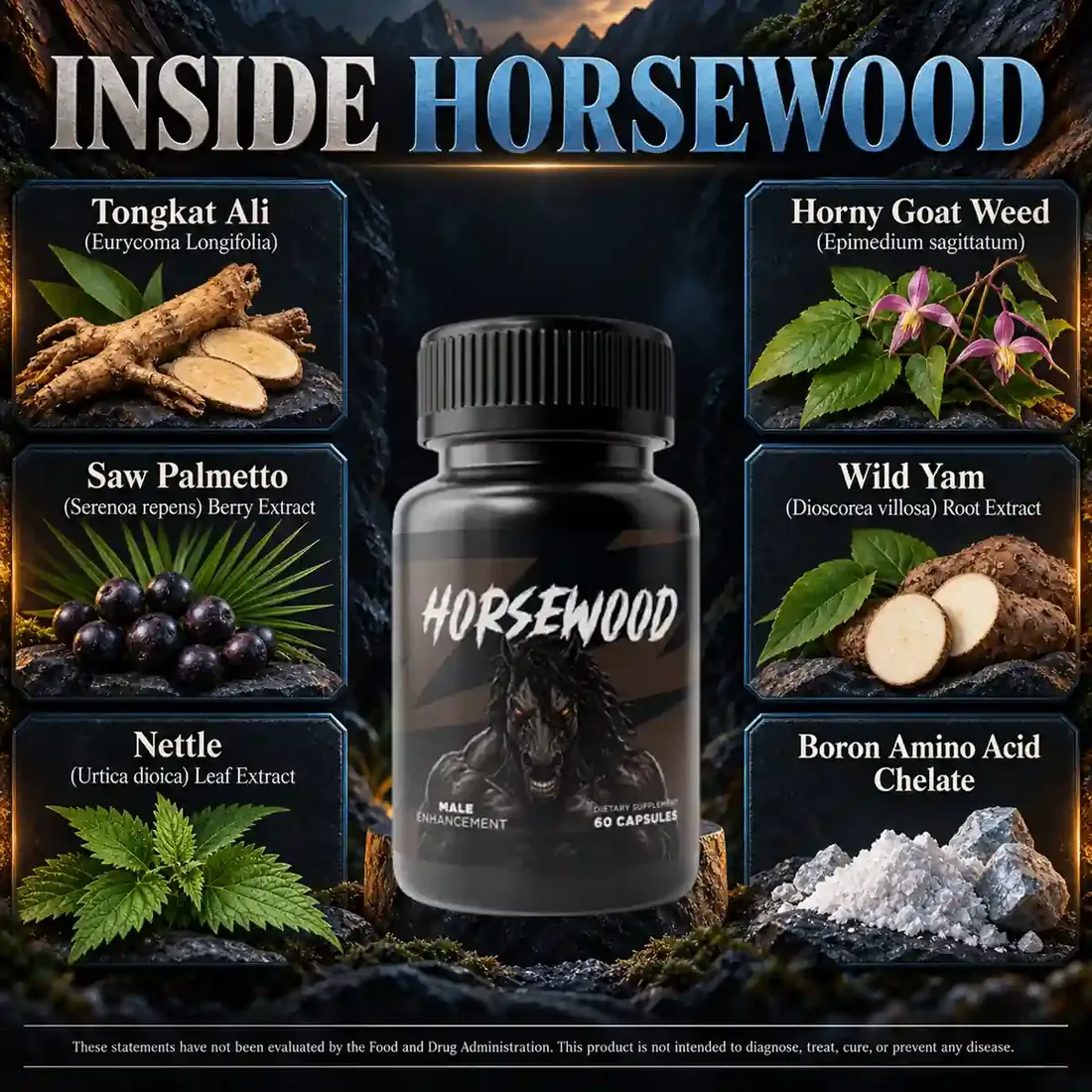
Each one is 20 mg per 2-capsule serving. The label gives the plant part for all three, which helps you match them to the research.
- Saw palmetto (Serenoa repens) berry extract: 20 mg
- Nettle (Urtica dioica) leaf extract: 20 mg
- Wild yam (Dioscorea villosa) root extract: 20 mg
Sarsaparilla root, boron chelate, tongkat ali and horny goat weed round out the formula. The full Horsewood ingredients page covers all seven.
Does saw palmetto help an enlarged prostate?
The best evidence says it gives little or no relief. A Cochrane review of 27 randomized trials and 4,656 men rated that finding high certainty.
Those trials tested saw palmetto alone for 3 to 17 months (Franco et al., 2023). NCCIH reaches the same view: it is probably not helpful for urinary symptoms, even at three times the usual dose (NCCIH, 2025).
Horsewood is not a treatment for an enlarged prostate or any prostate condition. Urinary changes deserve a doctor's visit, not a guess.
What dose of saw palmetto did the big trial use?
The CAMUS trial started at 320 mg a day and climbed to 960 mg a day. It ran 72 weeks in 369 men over 45, and saw palmetto did no better than placebo.
The team raised the dose every 24 weeks: 320 mg, then 640 mg, then 960 mg (Andriole et al., 2013). PSA did not move more than with placebo at any step.
- Weeks 1-24
320 mg a day
The usual dose. That is 16 times the 20 mg in a Horsewood serving.
- Weeks 25-48
640 mg a day
Doubled. Still no edge over placebo.
- Weeks 49-72
960 mg a day
Tripled. The result stayed flat.
Read that the right way round. If 960 mg a day did not beat a sugar pill for the prostate, 20 mg gives you little reason to expect more.
Does saw palmetto raise testosterone or lower libido?
It has not been shown to raise testosterone or libido. The major trials measured urinary symptoms and PSA, not hormones or desire.
We found no reliable source in our research set on saw palmetto lowering libido either. So treat both directions as unproven.
The real issue is safety. Memorial Sloan Kettering warns it may raise bruising and bleeding risk with blood thinners, and case reports describe heavy bleeding during surgery (MSKCC, 2023).
Is nettle root or nettle leaf the one that was studied?
Root. Prostate trials used nettle root extract, and the Horsewood label uses leaf.
One trial gave 429 mg of root extract a day for 52 weeks to 226 men. Store-bought nettle products often run 300 to 600 mg a day. NIH LiverTox calls the prostate results mixed and not proven (NIDDK LiverTox, 2023).
| Detail | Nettle in prostate research | Nettle in Horsewood |
|---|---|---|
| Plant part | Root | Leaf |
| Daily amount | 429 mg in one 52-week trial; 300-600 mg in common products | 20 mg |
| What was measured | Urinary symptoms of an enlarged prostate | No study of the formula |
| Result | Mixed, not proven | Not tested |
Leaf and root are different parts of the plant. A root study does not carry over to a leaf extract, and the amounts here are 15 to 30 times apart even before you account for that.
Does wild yam turn into DHEA or testosterone?
No. A lab can make hormones from diosgenin, a compound in wild yam, but the human body cannot.
Memorial Sloan Kettering says there is no evidence the body turns diosgenin into hormones such as progesterone (MSKCC, 2022). RxList makes the same point about DHEA: the lab step does not happen inside you (RxList, n.d.).
One study tested it directly. Older adults aged 65 to 82 took wild yam for three weeks, and their blood DHEA-S did not change (Araghiniknam et al., 1996). The group that took DHEA itself did see a change.
How do the three herbs stack up side by side?
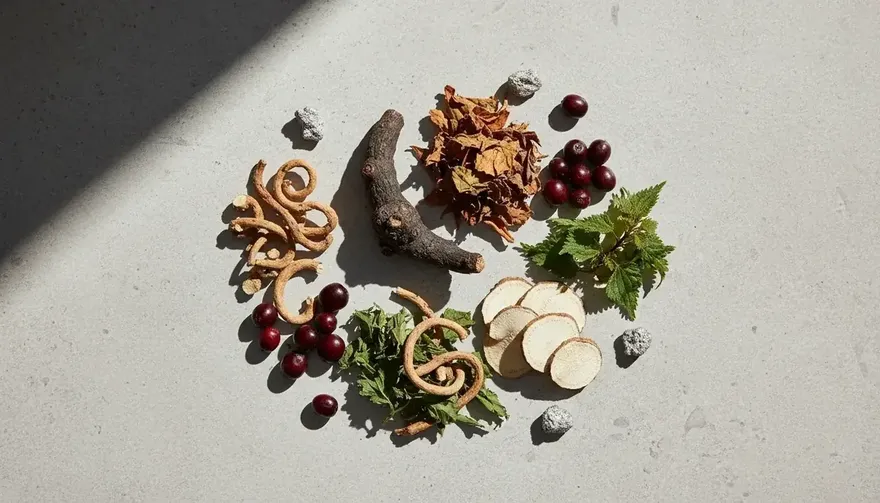
All three sit far below studied amounts, and none has evidence for libido or testosterone. Here is the short version.
| Herb | Horsewood amount | What research used | What it found |
|---|---|---|---|
| Saw palmetto berry | 20 mg | 320-960 mg a day, up to 72 weeks | Little or no benefit over placebo for urinary symptoms |
| Nettle | 20 mg of leaf | Root, 429 mg a day for 52 weeks | Mixed, not proven, and a different plant part |
| Wild yam root | 20 mg | No established dose | Does not raise DHEA; no hormone conversion in the body |
How can you check any prostate herb on a men's label?
Run the same four checks on every herb. They take two minutes and work on any brand.
- 1
Match the plant part
Berry, leaf or root? Research on one part does not cover another.
- 2
Match the amount
Put the label number next to the studied dose, not next to a marketing claim.
- 3
Match the goal
Was the herb tested for urinary symptoms, hormones or desire? Only the first applies here.
- 4
Check the result
A tested dose that failed is not a reason to expect more from a smaller one.
If the formula still appeals to you for its other lines, the tongkat ali 100:1 article covers the headline herb. The Horsewood side effects page lists every caution in one place.
Where does that leave Horsewood for a man weighing it up?
With honest expectations. Horsewood is a small-dose, seven-herb capsule with every amount printed, and these three lines are not its strong suit.
If you have urinary symptoms or trouble with erections, see a doctor first. ED can be an early sign of heart disease. If you still want to try the formula, the Horsewood pricing page shows the packs and the 60-day guarantee terms.
Saw palmetto, nettle and wild yam: common questions
Questions people type into Google and Bing, answered from the label and the sources on this page.
Does saw palmetto raise testosterone?
It has not been shown to. Saw palmetto research looks at urinary symptoms from an enlarged prostate, not at raising testosterone or libido.
What dose of saw palmetto was studied?
The usual dose is 320 mg a day. The NIH-funded CAMUS trial went from 320 mg up to 960 mg a day over 72 weeks. Horsewood has 20 mg.
Does saw palmetto help an enlarged prostate?
The best evidence says it gives little or no relief. A Cochrane review of 27 trials with 4,656 men reached that verdict, and higher doses did not help either.
Is nettle root or nettle leaf better for the prostate?
Root is the part that was studied for prostate symptoms, and even those results are mixed. The Horsewood label uses nettle leaf.
Does stinging nettle increase free testosterone?
The sources we checked do not show that in men. The human research on nettle covers prostate symptoms, using the root.
Does wild yam turn into DHEA?
No. A lab process can make hormones from a wild yam compound, but the body cannot do it. In older adults, three weeks of wild yam did not change DHEA-S levels.
Is wild yam good for men?
There is no good evidence it helps men's hormones or sex drive. Human studies are small, and the claim that it turns into hormones does not hold up.
Why are prostate herbs in sex pills?
Many men's formulas bundle prostate herbs with libido herbs. The label does not say why, and none of these three herbs has been shown to boost desire or performance.
Is saw palmetto safe with blood thinners?
Ask your doctor first. Saw palmetto may raise bruising and bleeding risk with blood thinners, and heavy bleeding during surgery has been reported.