Tongkat Ali at 10 mg: What a 100:1 Extract Really Means
Written by the Horsewood Daily editorial team
Last updated · Who reviewed this page · How we write and review
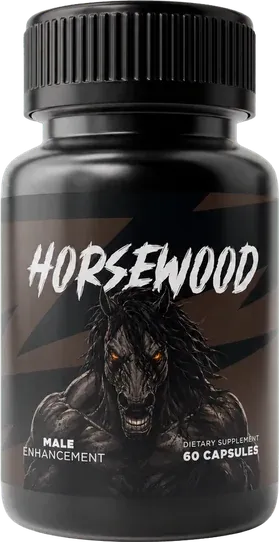
A 100:1 extract means about 100 parts of dry root made 1 part of extract. The Horsewood capsule serving holds 10 mg of tongkat ali extract; the 1,000 mg on the label is a conversion back to dry powder. Trials gave 100 to 600 mg of extract a day, so Horsewood has 10 to 60 times less.
What does 100:1 mean on the Horsewood tongkat ali line?
It is a ratio. About 100 parts of dry tongkat ali went into making 1 part of extract.
The Horsewood label prints it this way: tongkat ali 10 mg, from a 100:1 extract, equal to about 1,000 mg of dry tongkat ali powder. Read that slowly. The capsule holds 10 mg. The 1,000 mg is a conversion back to the raw herb.
So the big number is real math, but it is not what you swallow. You swallow 10 mg of extract, split across two capsules.
How do you turn a ratio label into real numbers?
You work backward from the extract weight. Every ratio label gives you two numbers, and only one of them is the dose.
- 1
Find the extract weight
On Horsewood that is 10 mg. This is the amount of tongkat ali in a 2-capsule serving.
- 2
Find the ratio
Here it is 100:1. It tells you how much dry root was used, not what the extract contains.
- 3
Spot the conversion
10 mg times 100 gives about 1,000 mg of dry powder. That is the large number on the label.
- 4
Compare extract to extract
Trials report extract weights. Put 10 mg next to their 100 to 600 mg, not the 1,000 mg.
The same habit works on the whole Horsewood Supplement Facts panel.
Is 10 mg of tongkat ali enough to match the studies?
No. Human trials gave 100 to 600 mg of extract a day, so 10 mg is 10 to 60 times less.
The clearest summary is a 2022 review of nine studies, with five randomized trials and 232 men pooled together (Leisegang et al., 2022). Extract doses ran from 100 to 600 mg a day. Most of the trials used one commercial water extract.
| Study | Who took part | Daily extract dose | Length | Gap to Horsewood |
|---|---|---|---|---|
| Leisegang et al., 2022 | 5 randomized trials, 232 men | 100-600 mg | 3 days to 6 months | 10 to 60 times more |
| Chinnappan et al., 2021 | 105 men aged 50-70 with low testosterone | 100 or 200 mg | 12 weeks | 10 or 20 times more |
| Talbott et al., 2013 | 63 stressed adults, 32 of them men | 200 mg | 4 weeks | 20 times more |
| Henkel et al., 2014 | 25 active seniors, no placebo group | 400 mg | 5 weeks | 40 times more |
The older-men trial is the strongest single study here (Chinnappan et al., 2021). Even its low arm gave 100 mg a day for 12 weeks. That is ten times the Horsewood amount, taken for three months.
Why does the 1,000 mg figure not close the gap?
Because the trials measured extract, not dry root. You cannot compare a dry-root equivalent to an extract dose and call it even.
Think of coffee. A bag of beans and a cup of brewed coffee are not the same dose, even if one came from the other. A label that quotes the beans tells you about the bag, not the cup.
The FTC says a health claim should rest on good human trials, and the product's dose and formula should match what was studied (FTC, 2022). A ratio conversion does not make 10 mg match 200 mg.
What a ratio does not tell you
- How much of the plant's active compounds made it into the extract.
- Whether the extract was made with water, alcohol or something else.
- Whether the batch matches the extract used in any trial.
- Whether the extract was tested for purity.
What is a standardized extract, and is the Horsewood one standardized?
A standardized extract is made to a set recipe so each batch is meant to match. The Horsewood label does not say what its tongkat ali extract is standardized to.
Most trials used a standardized hot-water root extract sold under the name Physta. The stress study gave 200 mg a day of it for four weeks (Talbott et al., 2013). A ratio alone is not the same as standardization.
You know the weight and the ratio. You do not know the recipe.
How long did the tongkat ali trials run?
Trials ran from 3 days to 6 months. Most of the well-known ones lasted 4 to 12 weeks at 100 to 400 mg a day.
- 4 weeks
The stress study
200 mg a day in stressed adults. Saliva cortisol fell and saliva testosterone rose versus placebo.
- 5 weeks
The senior pilot
400 mg a day in 25 active seniors, with no placebo group (Henkel et al., 2014).
- 12 weeks
The older-men trial
100 or 200 mg a day raised total testosterone versus placebo in men with low levels.
- 6 months
Longest trials in the review
Long-term safety beyond this point is thin.
None of these studies tested 10 mg or the Horsewood formula.
Is tongkat ali safe, and has the Horsewood extract been tested?
Short trials did not flag big problems, but long-term safety is not well known. No independent lab report for Horsewood has been published, including a screen for hidden drugs.
Rare cases of liver injury have been reported. NIH LiverTox adds that product strength and purity are not standardized across brands (NIDDK LiverTox, 2024). Defense Department reviewers report some tongkat ali products were found with lead, mercury or hidden sildenafil (OPSS (DoD), 2023).
The full list of cautions sits on the Horsewood side effects page.
Does the horny goat weed line use the same ratio trick?
Yes, the same math applies. Horsewood lists horny goat weed at 8 mg from a 10:1 extract, equal to about 80 mg of dry herb.
There is no clinical dose for horny goat weed to compare against. Products sold on their own usually run 250 to 500 mg (Drugs.com, 2026). The label also does not state the icariin content.
Tongkat ali
10 mg in the capsule. 1,000 mg is the dry-root conversion. Trials: 100-600 mg of extract.
Horny goat weed
8 mg in the capsule. 80 mg is the dry-herb conversion. Common products: 250-500 mg.
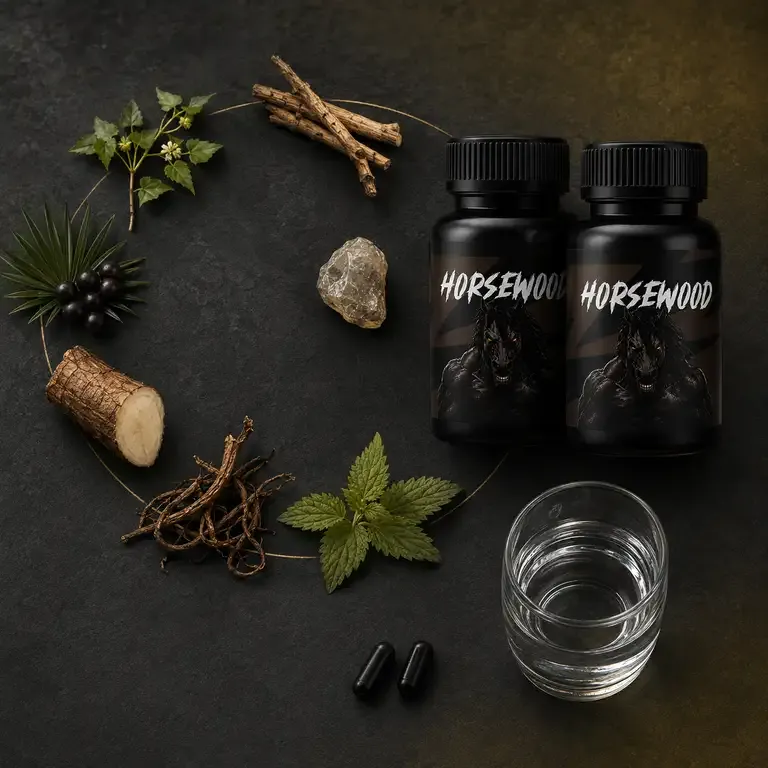
The Horsewood ingredients breakdown puts every line next to its research dose. For the three 20 mg herbs, read what the evidence says on saw palmetto, nettle and wild yam.
So should a 10 mg tongkat ali dose change your decision?
It should set your expectations. Ten milligrams of extract is a small amount by any trial yardstick, and the label's 1,000 mg figure does not change that.
Some men still want a low-dose capsule with every amount printed. That is a fair choice made with open eyes. If that is you, the Horsewood pricing page lists the 2, 3 and 6 bottle packs as printed on the sales page on October 13, 2026.
Before you buy a ratio-labeled tongkat product: 0 of 5 checked
Tongkat ali 100:1 extracts: common questions
Questions people type into Google and Bing, answered from the label and the sources on this page.
What does 100:1 extract mean?
It means about 100 parts of dry herb went in to make 1 part of extract. On the Horsewood label, 10 mg of a 100:1 tongkat ali extract is listed as equal to about 1,000 mg of dry powder.
Is 10 mg of tongkat ali enough?
Not by trial standards. Human studies gave 100 to 600 mg of extract a day, so 10 mg of extract is 10 to 60 times less than what was tested.
How much tongkat ali did studies use?
The trials in a 2022 review used 100 to 600 mg of extract a day, and most used 200 to 400 mg. They ran from 3 days to 6 months.
Is 100:1 tongkat ali stronger than 200 mg?
Not on paper. Trial doses like 200 mg are weights of extract, and 10 mg of a 100:1 extract is still 10 mg of extract. The ratio describes how it was made, not how much you swallow.
What is a standardized tongkat ali extract?
It is an extract made to a set recipe so each batch is meant to match. Most trials used one standardized hot-water root extract. The Horsewood label does not say what its extract is standardized to.
How much tongkat ali should I take a day?
Follow the label of the product you use and ask your doctor first. The Horsewood serving is 2 capsules a day, which holds 10 mg of tongkat ali extract.
Is tongkat ali safe long term?
No one knows for sure. NIH LiverTox says the trials were small and short, long-term safety is not well known, and rare liver injury has been reported.
Can tongkat ali contain heavy metals?
Yes, some products have. Defense Department reviewers report tongkat ali products found with lead, mercury or hidden sildenafil. Horsewood has no published independent lab report.
Does a 10:1 horny goat weed extract work the same way?
The math is the same. Horsewood lists 8 mg of a 10:1 extract as equal to about 80 mg of dry herb, while products sold on their own usually run 250 to 500 mg.