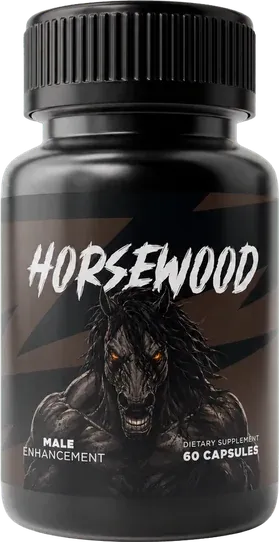
Horsewood Guides: Male Vitality and Supplement Buying, Explained
Written by the Horsewood Daily editorial team
Last updated · Who reviewed this page · How we write and review
The Horsewood guides cover two topics: what drives male vitality and when to see a doctor, and a ten-point checklist for choosing a male enhancement supplement. Three blog posts explain the 100:1 tongkat ali extract, the evidence for saw palmetto, nettle and wild yam, and red flags in ads. A glossary decodes ten label terms.
Horsewood guides: two long reads that put your health first
The Horsewood guides answer two questions: what male vitality really depends on, and how to judge a supplement label. Both are free and written in plain words.
Read the vitality guide first if something has changed. Use the checklist when you are ready to compare bottles.
Male Vitality Guide: Energy, Drive and When to See a Doctor
What vitality means in plain terms, the warning signs ED can carry, the habits worth raising with a doctor and where a supplement fits.
Choosing a Male Enhancement Supplement: The Buyer's Checklist
Ten checks for any male enhancement label, from doses and extract ratios to hidden-drug risk and ad tricks, run straight on Horsewood.
Horsewood blog: three posts on doses, herbs and ads
The Horsewood blog takes one topic per post and goes deep. Each post links its sources, so you can open the studies yourself.
Start with the post that matches the line on the label that caught your eye.
Tongkat Ali at 10 mg: What a 100:1 Extract Means
Why the 1,000 mg on the label is a conversion, and how 10 mg compares with the 100-600 mg used in trials.
Saw Palmetto, Nettle and Wild Yam: The Evidence
What the big prostate trials found, why leaf is not root, and why wild yam does not become a hormone.
Male Enhancement Ads: Lab Coats, Logos and Red Flags
Countdown timers, borrowed university logos, unnamed doctors and review counts no one can see.
New posts land on the blog page first.
Which Horsewood read answers your question?
Match your question to one read. Most men get the most from the vitality guide first and the checklist second.
- Low drive, low energy or erection trouble? Start with the male vitality guide.
- Comparing labels before you buy? Work through the buyer’s checklist.
- Confused by “1,000 mg” next to 10 mg of tongkat ali? Read the 100:1 extract post.
- Wondering why prostate herbs sit in a sex supplement? Read the saw palmetto, nettle and wild yam post.
- Felt rushed by a timer or a lab-coat photo? Read the ad red flags post.
Horsewood glossary: label terms in plain English
Ten terms explain almost everything on the Horsewood panel. The right column shows how each one appears on the bottle.
A few of these terms carry real limits. Adults should stay under 20 mg of elemental boron a day (NIH ODS, 2022), and FDA does not issue registration certificates (FDA, 2024).
| Term | What it means | On the Horsewood label |
|---|---|---|
| 100:1 extract | 100 parts of dry herb were concentrated into 1 part of extract. | Tongkat ali 10 mg; label says equal to about 1,000 mg dry powder |
| 10:1 extract | 10 parts of dry herb made 1 part of extract. | Horny goat weed 8 mg; label says equal to about 80 mg dry powder |
| Amino acid chelate | A mineral bound to an amino acid. The label weight includes both. | Boron chelate 20 mg |
| Elemental amount | The weight of the mineral itself, without its carrier. | Not stated for boron |
| Standardized extract | An extract tested to hold a set amount of a marker compound. | Not stated for tongkat ali or horny goat weed |
| Daily Value (†) | The official daily target. A dagger means none exists. | Every line carries a dagger |
| Structure/function claim | A claim about a body function, not a disease. | “Support for healthy blood flow & male response” |
| FDA registered facility | A factory listed with FDA. Not a product approval. | Printed on the label |
| Assembled vs made | Assembled means put together here. Made implies more. | Label: Assembled in the USA |
| Lot and CoA | A batch code and the lab report that should match it. | HOR-26/HO-6606 and HOR-6606-26-HO, draft labels |
How do the Horsewood guides read a supplement label?
The Horsewood guides read every label in the same five steps. You can run them on any men's supplement, including one already in your cabinet.
It takes about five minutes with the bottle in your hand.
- 1
Find the serving
Note how many capsules make one serving and how many servings the bottle holds.
- 2
List every amount
Write down each milligram. Mark any extract ratio and any chelate.
- 3
Strip out the ratios
Compare extract weight to extract weight. A conversion like 1,000 mg is not what the capsule holds.
- 4
Set it beside the research
Put each amount next to the daily dose used in human studies.
- 5
Check the claims
Support wording is normal. Cure, size or testosterone promises are red flags.
What did the Horsewood guides find in the formula?
The Horsewood guides found every amount printed and every amount small. No study has tested the finished formula, so the research covers single ingredients at higher doses.
These points come up again and again:
- Tongkat ali is 10 mg of extract. Trials used 100-600 mg a day, so the label is 10 to 60 times lower (Leisegang et al., 2022).
- Saw palmetto is 20 mg. Even 320-960 mg a day did no better than placebo in a 72-week trial (Andriole et al., 2013).
- The label uses nettle leaf, while prostate research used the root (NIDDK LiverTox, 2023).
- Wild yam does not turn into DHEA or other hormones in the body (MSKCC, 2022).
- Horny goat weed has no proven clinical dose, and commercial products run 250-500 mg (Drugs.com, 2026).
Why do the Horsewood guides start with habits, not capsules?
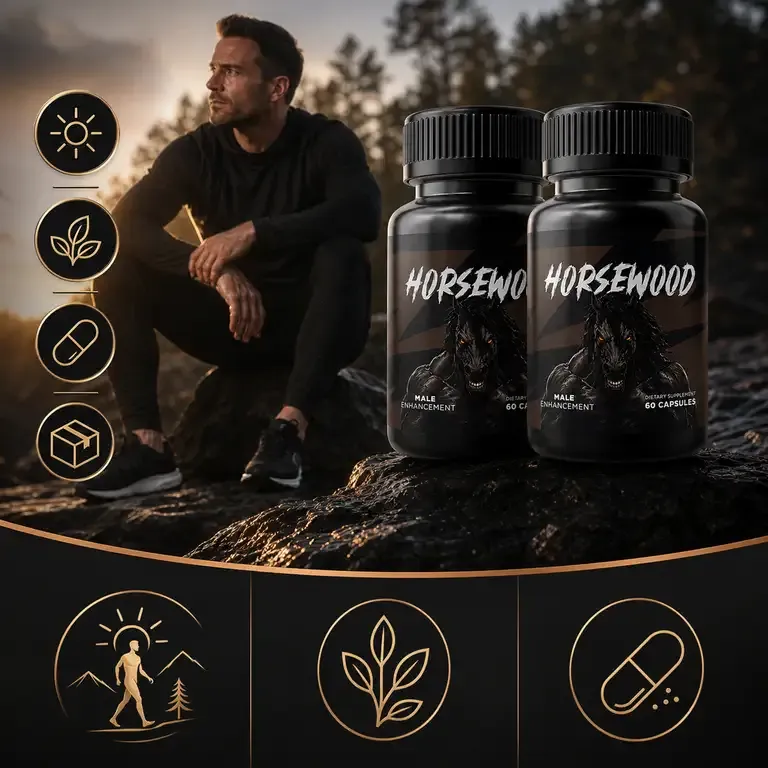
The guides start with habits because the things that drive vitality sit outside any bottle. ED may be a symptom of hardened arteries, high blood pressure or diabetes (NIDDK, 2024).
A capsule cannot measure blood pressure or blood sugar. A checkup can, and the habits that protect your heart are worth starting whatever you decide about supplements.
Who writes and checks the Horsewood guides?
The Horsewood Daily editorial team writes every guide and post from the bottle label, the sales page and linked NIH, NCCIH, FDA and FTC sources. Missing facts are marked “not published” instead of guessed.
Each page also carries a slot for our medical reviewer. It stays a marked blank until a named, qualified person has checked the page.
The rules for sources and claims are set out in the editorial policy.
What will the Horsewood guides never tell you?
The Horsewood guides only say what a source supports. Some things never appear, however often people search for them.
- That a capsule will add size, stamina or testosterone
- That any supplement treats erectile dysfunction or a prostate condition
- A results-in-days promise the seller never backed with a study
- A customer rating, review count or quote that no one has verified
- The name of a doctor who has not actually reviewed the page
Questions about the Horsewood guides
Questions people type into Google and Bing, answered from the label and the sources on this page.
Do the Horsewood guides cost anything?
No. Both guides and all three blog posts are free to read. There is no sign-up, no email gate and no paywall.
Are the Horsewood guides a substitute for a doctor?
No. They explain label facts and public research in plain words. Questions about your heart, hormones or medicines belong with a doctor who knows you.
Which Horsewood guide should I start with?
Start with the male vitality guide if something has changed in your body. Use the buyer's checklist once a doctor has ruled out a medical cause and you still want a supplement.
Do the Horsewood guides claim the product works?
No. No study has tested the finished formula. The guides describe research on single ingredients and show how far the label amounts sit from the studied doses.
What is elemental boron?
It is the weight of boron itself, not the compound it is bound to. Labels should list elemental boron, and adults should not go above 20 mg a day (NIH ODS, 2022). The Horsewood label gives only the 20 mg chelate weight.
On a Supplement Facts panel, what does the dagger symbol mean?
It means a Daily Value has not been set for that ingredient. Every line on the Horsewood panel carries one, since herbs and this chelate have no official daily target.
What is a structure/function claim?
It is a claim about supporting a normal body function, like “Natural support for libido & desire.” FDA does not approve these claims in advance, and they must carry a disclaimer (FDA, 2024).
Are the Horsewood guides sponsored?
The site is run by the USA Authorized Horsewood Retailer, and buy buttons are tagged as sponsored links. The guides still print the small doses and the missing lab report, because the facts do not change with the sale.
How often are the Horsewood guides checked?
Every page shows a Last updated date. The latest full check of the label, the sales page and the sources was finished on October 13, 2026.