Horsewood Ingredients List: 7 Label Lines Checked
Written by the Horsewood Daily editorial team · Medically reviewed by Dr. Landon Trost, MD, Physician
Last updated · Review date · How we write and review
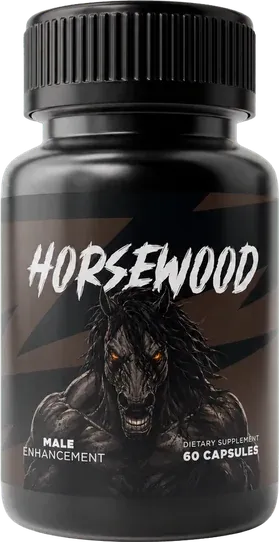
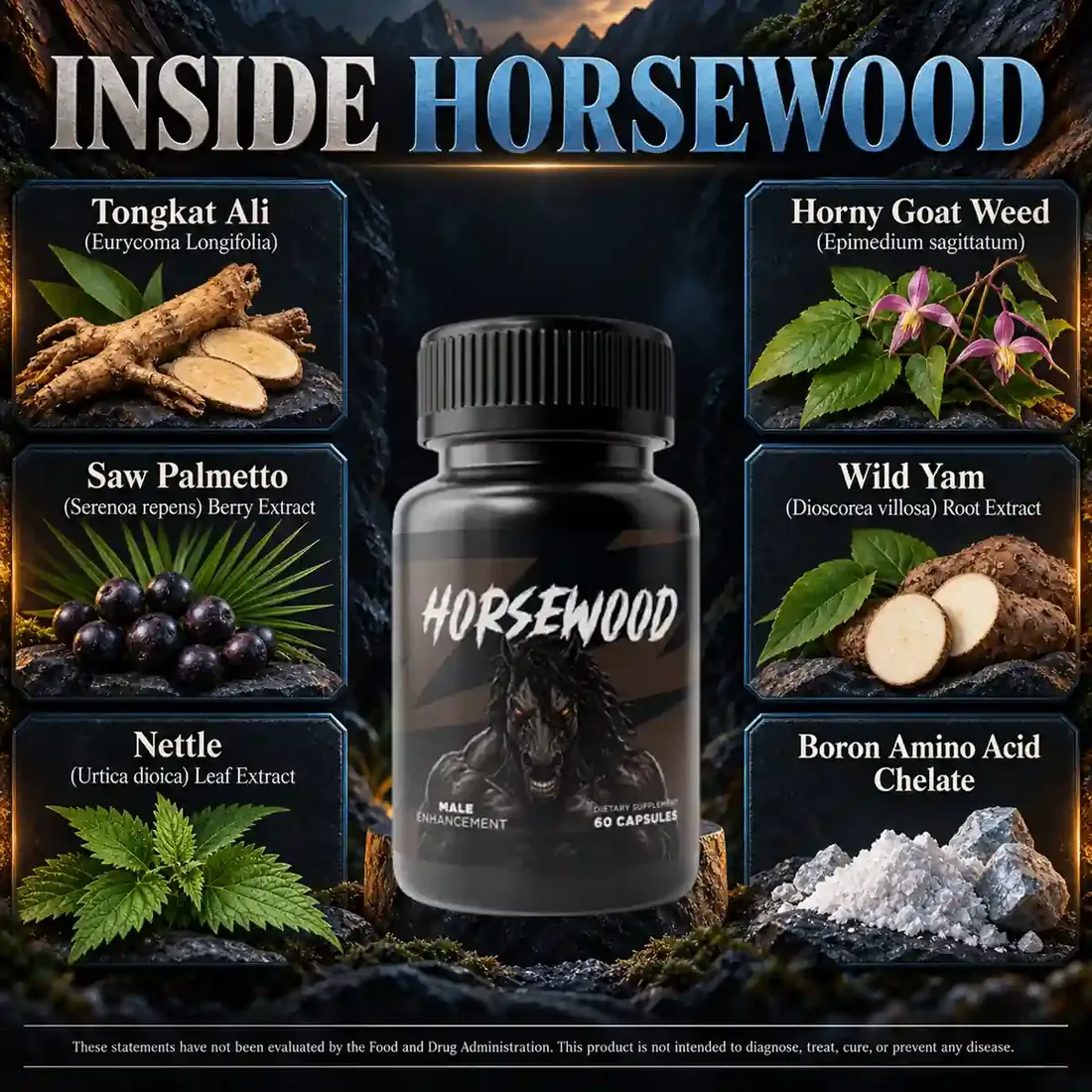
Horsewood lists seven ingredients per 2-capsule serving, 118 mg in total: saw palmetto, wild yam, sarsaparilla, nettle leaf and boron chelate at 20 mg each, tongkat ali at 10 mg and horny goat weed at 8 mg. Every amount is printed. Elemental boron, icariin and the tongkat ali standard are not published.
What is on the Horsewood ingredients list?
Seven lines, each with an amount. That is the short answer. The long answer is that the amounts are small, and three of the lines leave out a detail you would want. Here is the whole panel, with the notes we think matter.
| Ingredient | Form on the label | Per serving |
|---|---|---|
| Saw palmetto | Serenoa repens berry extract | 20 mg |
| Wild yam | Dioscorea villosa root extract | 20 mg |
| Sarsaparilla | Smilax ornata root extract | 20 mg |
| Nettle leaf | Urtica dioica leaf extract | 20 mg |
| Boron | Boron amino acid chelate (elemental boron not stated) | 20 mg |
| Tongkat ali | Eurycoma longifolia, 100:1 extract (label: equal to about 1,000 mg dry powder) | 10 mg |
| Horny goat weed | Epimedium sagittatum, 10:1 extract (label: equal to about 80 mg dry powder) | 8 mg |
Key facts
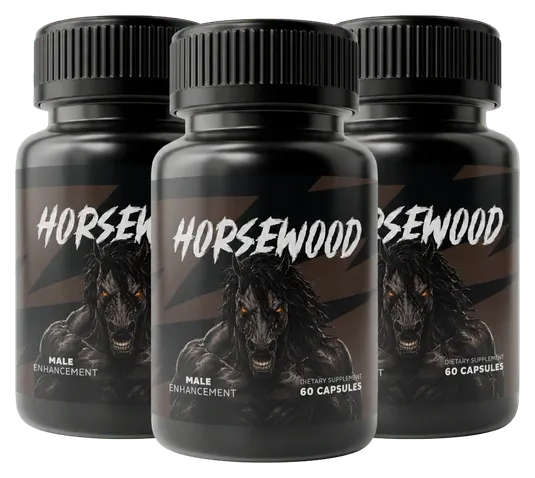
- Serving size is 2 capsules. A 60-capsule bottle holds 30 servings.
- Five lines at 20 mg, plus 10 mg and 8 mg, make 118 mg per serving.
- That is 59 mg of actives per capsule. The rest of each capsule is the shell and two helpers.
- There is no proprietary blend, so no amount hides behind a total.
- Other ingredients: microcrystalline cellulose, gelatin and magnesium stearate.
- The product is not FDA approved, as no supplement is, and it is not an ED treatment.
Lines 1 and 2: what are the saw palmetto and nettle leaf at 20 mg each?
Both are old prostate herbs, and both appear at one sixteenth or less of the amounts used in research. Neither shows strong results.
Saw palmetto. The usual dose is 320 mg (NCCIH, 2025). The CAMUS trial gave 320 to 960 mg a day for 72 weeks and found no benefit over placebo for urinary symptoms (Andriole et al., 2013). It may also add to bleeding risk with blood thinners (MSKCC, 2023).
Nettle leaf. Prostate research used the root, at 429 mg of root a day, not the leaf (NIDDK LiverTox, 2023). The label says leaf. So the studied part and the labeled part differ.
Our evidence article on saw palmetto, nettle and wild yam goes through the trials in detail.
Lines 3 and 4: what do wild yam and sarsaparilla do?
These two are folk roots. The marketing sometimes hints that they act on hormones. The sources say otherwise.
Wild yam. It does not turn into DHEA or hormones in the body (MSKCC, 2022). In older adults, 3 weeks of wild yam left DHEA-S levels unchanged (Araghiniknam et al., 1996). No dose is established.
Sarsaparilla. There is not enough evidence to rate it for any use, and the claim that it becomes a steroid is false (RxList, n.d.). The seller's own ingredient graphic leaves this line out, which we cover below.
Line 5: what does the boron amino acid chelate line mean?
A chelate is a mineral bound to amino acids. The 20 mg on the label is the weight of that whole compound, not of boron itself. So the elemental boron is lower, and the label does not say how much lower.
That matters because research doses are given as elemental boron. In one small study, 8 men took 10 mg of elemental boron a day for 1 week, and free testosterone rose (Naghii et al., 2011). Adults should stay under 20 mg of elemental boron a day from all sources (NIH ODS, 2022). If you take other boron products, add them up and show the list to a pharmacist.
Line 6: how much tongkat ali is really in the capsule?
Ten milligrams of extract per serving. The label also says the 100:1 extract equals about 1,000 mg of dry powder. That second number is a conversion back to raw root. You swallow the 10 mg.
Trials used 100 to 600 mg of extract a day (Leisegang et al., 2022), so Horsewood holds 10 to 60 times less. The label does not say what the extract is standardized to. NIH LiverTox notes rare reports of liver injury, and says product strength and purity are not standardized across brands (NIDDK LiverTox, 2024).
For the full ratio math, see our article on the 100:1 extract.
Line 7: what is in the horny goat weed line?
Eight milligrams of a 10:1 extract, which the label says equals about 80 mg of dry herb. The label does not state the icariin content, which is the compound most often discussed for this herb.
No clinical dose exists. Commercial products usually run 250 to 500 mg (Drugs.com, 2026). There are case reports of fast heart rhythm and rash, and rigorous controlled trials are lacking (NIDDK LiverTox, 2022). If you take blood-pressure or heart medicine, ask your doctor first.
What are the other ingredients, and are the capsules vegetarian?
Three more lines sit under the panel: microcrystalline cellulose, gelatin and magnesium stearate. None is an active ingredient. Gelatin forms the capsule shell, and it comes from animals.
A badge on the seller's pack calls the capsules vegetarian. The label lists gelatin, so the capsules are not vegetarian. If you avoid animal products, this is not your capsule. The label makes no gluten-free claim either, so ask the order desk before you buy if gluten matters to you.
Does Horsewood have six ingredients or seven?
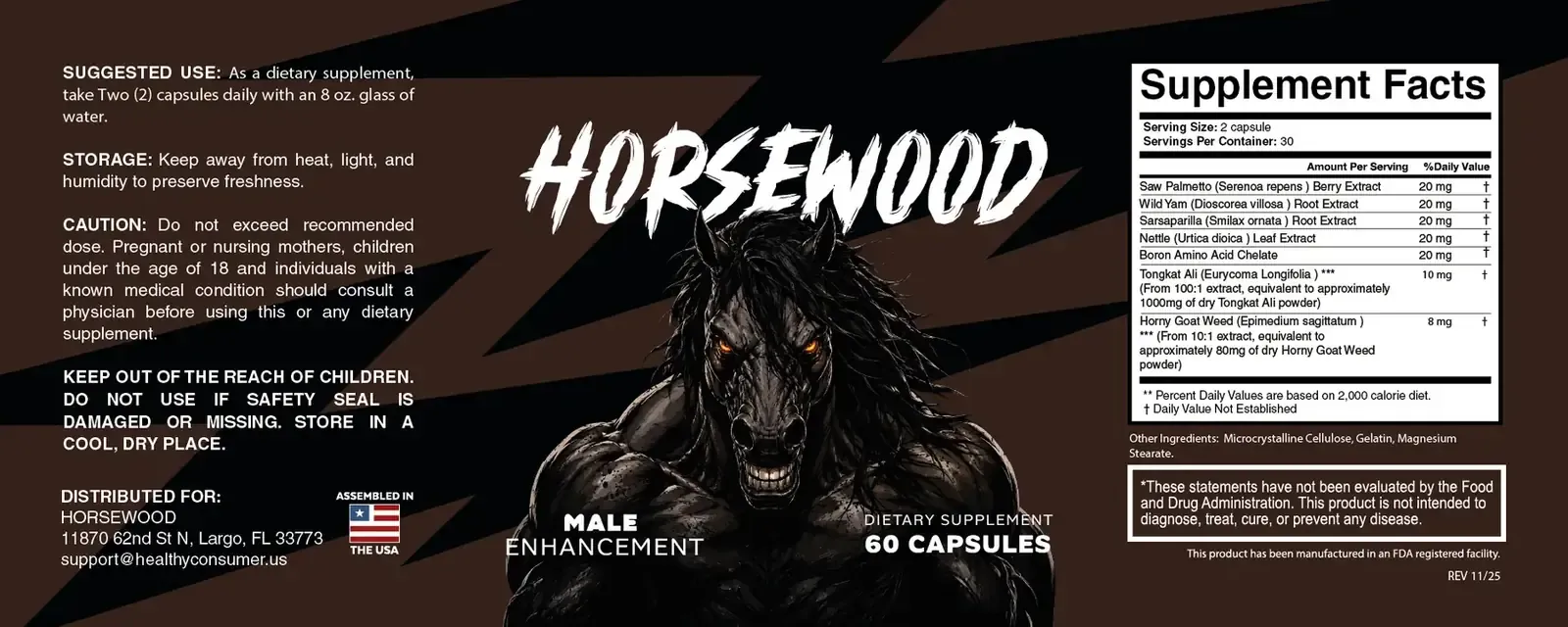
Seven. The bottle label lists seven lines, and the label is the record that counts. The seller's “Inside Horsewood” graphic shows six tiles and skips sarsaparilla. A paid press release also lists the 2-capsule amounts as if they were per capsule.
So if another page shows six ingredients or per-capsule amounts, it is not matching the bottle. Check your own panel against the table above.
Read your own bottle: 0 of 5 checked
Frequently asked questions
Short answers, taken from the label, the seller terms and the sources named on this page.
What are the ingredients in Horsewood?
Saw palmetto berry extract, wild yam root extract, sarsaparilla root extract, nettle leaf extract and boron amino acid chelate at 20 mg each, tongkat ali at 10 mg and horny goat weed at 8 mg.
How many mg is Horsewood per serving?
118 mg of active ingredients per 2 capsules. That is five lines at 20 mg, plus 10 mg of tongkat ali and 8 mg of horny goat weed.
Are Horsewood capsules vegetarian?
No. The label lists gelatin, and the capsule shell is made of it. A seller badge that says vegetarian does not match the label.
Does Horsewood contain a proprietary blend?
No. Every line has its own amount, so nothing hides behind a single total.
What is the difference between Horsewood pills and capsules?
Horsewood is sold as capsules, 60 per bottle. Searches often say pills, but the label says capsules.
Which facts are not on the Horsewood label?
The elemental boron in the chelate, the icariin in the horny goat weed extract, the tongkat ali standard and the manufacturer's name are not published.
Our view
Horsewood does one thing most men's formulas do not. It prints every amount. That makes it easy to check, and the check is not flattering. Each line is below its research dose, and three lines leave out a detail you would want.
If you value an open label, this one is open. If you want doses near the studies, it is not close. Either way, read the panel on your own bottle, show it to your doctor if you take medicine, and follow the 2-capsule direction.