Male Enhancement Ads: Lab Coats, Logos and Other Red Flags
Written by the Horsewood Daily editorial team
Last updated · Who reviewed this page · How we write and review
The main red flags are an unnamed doctor in a lab coat, university or NIH logos with no study of the product, countdown timers, review counts with no readable reviews, paid press releases and "FDA registered" badges. The Horsewood sales page shows all of them. Trust the bottle label, not the ad.
What are the red flags in a male enhancement ad?
The big ones are borrowed authority, fake urgency and proof you cannot check. Lab coats, logos, timers and review counts with no reviews behind them all fall into those three groups.
We looked at the Horsewood sales page on October 13, 2026, and found examples of each. That does not make the capsules dangerous. It does mean the ad should not be your reason to buy.
An unnamed doctor in a lab coat, plus university and NIH logos.
A 10-minute countdown timer and a while-stock-lasts line.
A claim of thousands of verified reviews, with none shown.
Why do supplement ads put a doctor in a lab coat?
A white coat borrows trust the product has not earned. If the doctor has no name and no credentials, the coat is a costume.
Federal endorsement rules are clear on this. An expert in an ad must actually have the expertise shown, must have really evaluated the product, and any paid tie must be disclosed (FTC, 2023).
The Horsewood sales page shows a lab-coat doctor image with no name, no license and no statement about what was reviewed. This site never invents a doctor. Our medical reviewer is named only after the role is confirmed.
Can a supplement ad show university or NIH logos?
It can show them, but a logo proves nothing about the product. A logo strip usually means someone, somewhere, studied an ingredient. It rarely means anyone studied the bottle being sold.
The Horsewood sales page has a scientific references strip with university and NIH logos. A small line nearby says the groups do not endorse the product. Read that line. It is the most honest sentence in the strip.
Ask one question when you see a logo: did this group test this exact formula at this exact dose? For Horsewood the answer is no. No study of the finished formula has been published.
Are countdown timers like the one on the Horsewood page real?
A timer is pressure, not information. It cannot tell you what stock is left or what tomorrow's price will be.
The Horsewood sales page runs a 10-minute countdown and a while-stock-lasts message. We could not see stock levels, so we recorded the prices instead.
On October 13, 2026, the sales page listed $79, $69 and $49 per bottle for 2, 3 and 6 bottles. The guarantee window is 60 days from purchase. You have time to think, so take it.
How can you spot fake supplement reviews?
Look for reviews you can actually read, tied to a real order. A big number with nothing behind it is not proof.
The Horsewood sales page claims thousands of verified reviews and shows none. Around it sit many look-alike review pages on lovable.app and spam pages on unrelated sites. Trustpilot pages we found belong to look-alike domains, not the brand.
Since 2024, federal rules ban fake reviews, bought reviews and fake review sites (FTC, 2024). The Horsewood reviews page on this site keeps every slot blank until a real, order-matched review fills it.
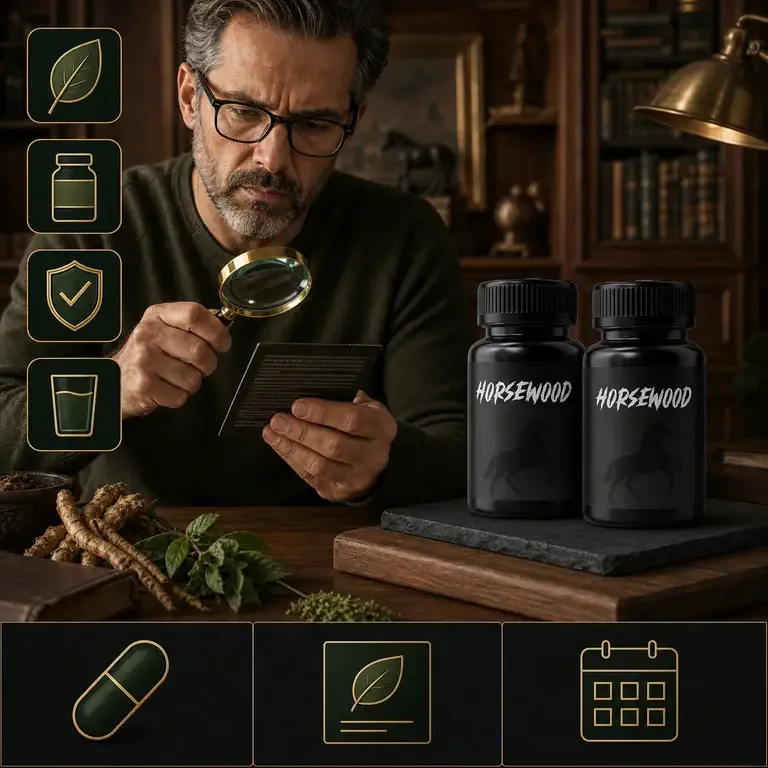
Signs a review page is fake
- Every review is five stars, with no downsides.
- No pack size, time frame or order detail.
- The page praises one product and links straight to checkout.
- The domain looks like the brand but is not it.
What is a paid press release, and why trust the label over it?
A paid press release is an ad written by the seller and sent through a news wire for a fee. It looks like news, but no reporter checks it.
A June 2026 release for Horsewood on GlobeNewswire quotes older prices and a 1-capsule dose. It also lists the 2-capsule amounts as if they were per capsule. The bottle label says 2 capsules a day, and the label wins.
The math backs the label. Sixty capsules make 30 servings only at two a day, and the 6-bottle pack is a 180-day supply only at that rate.
Is "FDA registered" the same as FDA approved?
No. An FDA-registered facility is a factory listed with the agency. It is not a seal of approval for any product made there.
FDA does not have the authority to approve supplements before they are sold (FDA, 2022). It also does not issue registration certificates or recognize ones sold by private companies (FDA, 2024).
 A badge like this describes the factory, not the formula
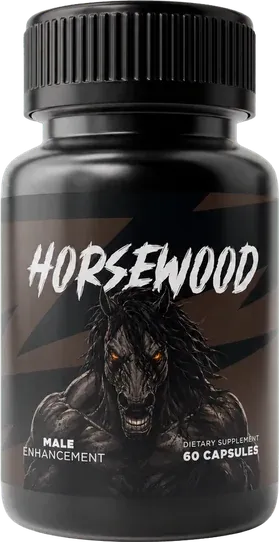
The Horsewood label says manufactured in an FDA registered facility. That is a fair statement about the plant. The manufacturer is not named, and no independent lab report has been published. The Horsewood testing and quality page covers what is and is not known.
Which Horsewood claims do not match the label?
Several. The sales material and the bottle disagree on dose, capsule type, origin and ingredient count.
When two sources clash, go with the label in your hand. Here is what we found.
| What the marketing says | What the label or terms say | Which to trust |
|---|---|---|
| 1 capsule daily (sales page, press release) | 2 capsules daily with an 8 oz glass of water | The label |
| Vegetarian badge | Gelatin capsule shell, so not vegetarian | The label |
| Made in USA (sales site) | Assembled in the USA | The label |
| Six ingredients (seller pack) | Seven lines, including sarsaparilla | The label |
| Keep the bottles, send them back empty (FAQ) | Unused bottles in perfect condition (refund page) | Ask the order desk first |
Statistics on the sales page carry no source. A number without a source is a decoration, not evidence.
Why does the Horsewood 6-bottle pack come with free e-books?
Bonuses make the biggest pack look like more value. They nudge you toward the largest order.
The Horsewood 6-bottle pack comes with bonus e-books by email. The titles in the page text and the titles in the images do not match. Judge the pack on price per bottle, dose and refund terms, not on the extras.
How should you read the next male enhancement ad?
Slow down and check the facts the ad would rather you skip. Five quick checks cover most of it.
Before you trust a supplement ad: 0 of 5 checked
Our guide to choosing a male enhancement supplement goes further. If Horsewood still makes your list after the red flags, buy through the authorized U.S. retailer and check the packs on the Horsewood pricing page before you pay.
Male enhancement ad red flags: common questions
Questions people type into Google and Bing, answered from the label and the sources on this page.
Why do supplement ads use doctors in lab coats?
Because a white coat borrows trust. Federal rules say an expert in an ad must really have that expertise, must have actually evaluated the product, and paid ties must be disclosed.
Can a supplement use the Harvard or NIH logo?
A logo on a sales page is not an endorsement. If an ad shows university or government logos, look for a study of that exact product. Most of the time there is none.
Are countdown timers on supplement sites real?
Treat a timer as pressure, not information. It tells you nothing about price or stock. Write down the price, close the tab and decide when you are calm.
How can you spot fake supplement reviews?
Watch for a big review count with no reviews you can read, sites that only praise one product, and look-alike domains. Real reviews name a pack, a time frame and some downsides.
What are paid press releases for supplements?
They are ads written by the seller and sent out through a news wire for a fee. They read like news but nobody checks them. Trust the bottle label over any press release.
Is "FDA registered" the same as FDA approved?
No. A registered facility is a factory listed with FDA. FDA does not approve supplements before sale and does not issue registration certificates.
What does the FTC say about fake reviews?
Since 2024, a federal rule bans fake reviews, bought positive reviews, undisclosed insider reviews and fake review sites.
How do I report a misleading supplement ad?
You can report a misleading ad to the Federal Trade Commission, which polices ads. Save screenshots with the date. If a product made you ill, tell your doctor.
Why do supplement sites offer free e-books?
Bonuses make a bigger pack feel like more value. Judge the pack on price per bottle, the dose and the refund terms, not on the extras.